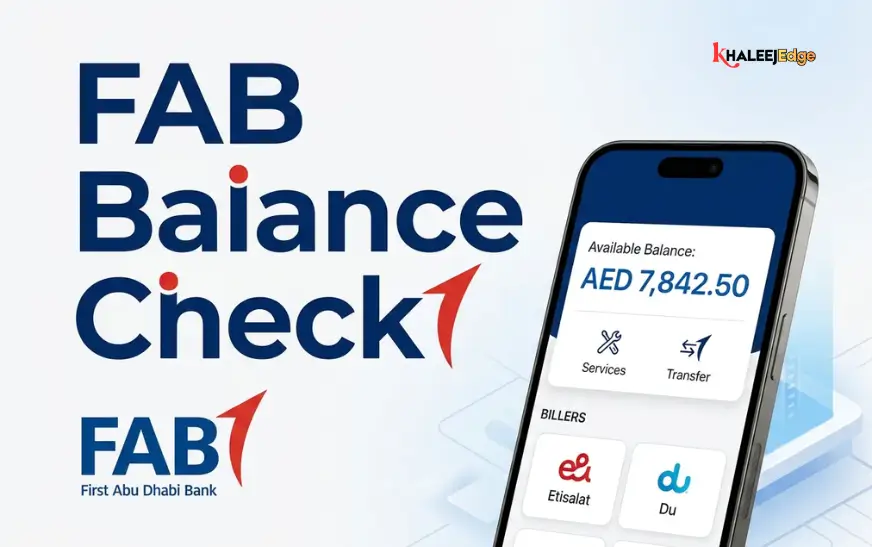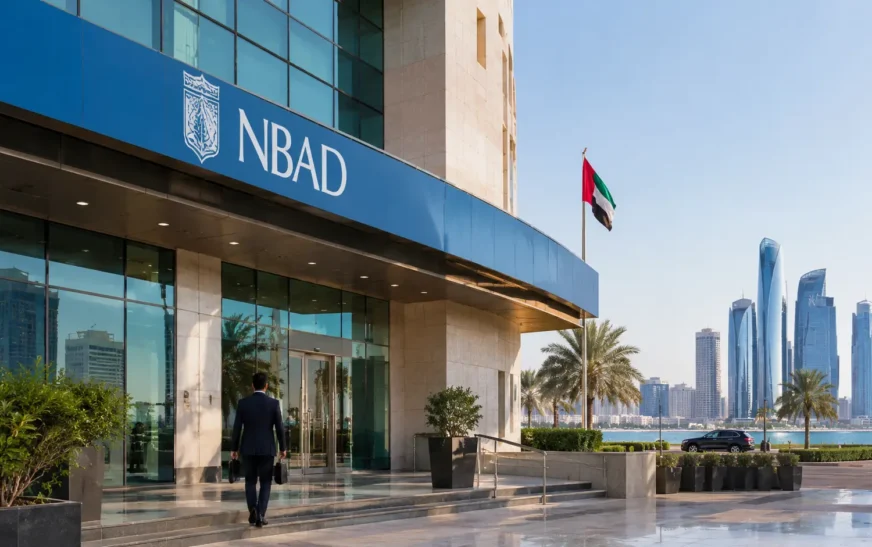
NBAD, the National Bank of Abu Dhabi, no longer operates as a standalone bank. It merged with First Gulf Bank (FGB) in 2017, and the combined lender now trades and operates as First Abu Dhabi Bank (FAB), the largest bank in the UAE. If you spotted “NBAD bank” on an old statement, a legacy card, a CV or a relative’s paperwork, the short answer is that the relationship now sits with FAB.
This guide explains where NBAD came from, how the merger worked, what it means if you once banked with NBAD, and how to stay safe when someone uses the old name. It also gives a snapshot of FAB in 2026. Time-sensitive figures are dated so you can check them against the bank’s latest disclosures.
What Was NBAD Bank?
National Bank of Abu Dhabi was established in 1968 under an Emiri decree issued by Sheikh Zayed bin Sultan Al Nahyan, then Ruler of Abu Dhabi and later the founder of the UAE. It is widely described as the emirate’s first bank, set up so that Abu Dhabi would have a national institution of its own as oil wealth began reshaping the economy.
An early international player
NBAD was the first UAE bank to expand overseas, with a branch opening abroad in 1975. By the time of the merger, its network reached 17 countries across five continents, according to published company histories. That overseas footprint is part of the reason FAB still earns a meaningful share of its revenue outside the UAE.
A familiar name in daily life
For many residents, NBAD was recognisable by its green logo of a gazelle, a palm tree and an oil derrick, a design that nodded to the country’s heritage and the discovery of oil. The bank was also the official bank of the Formula One Abu Dhabi Grand Prix from its first race in 2009. That visibility explains why people still search for “NBAD bank” years after the brand was retired.
How NBAD Became First Abu Dhabi Bank
The deal was described by both banks as a merger of equals, and it was structured as a share swap in which FGB shareholders received new NBAD shares. The key milestones:
- July 2016: NBAD and FGB announced plans to combine, with the new bank to be called First Abu Dhabi Bank.
- October 2016: The leadership line-up emerged. Abdulhamid Saeed, a former FGB board member and managing director, was named to lead the group, while NBAD’s then CEO, Alex Thursby, was not set to continue.
- December 2016: Shareholders approved the deal at a general assembly. Central Bank of the UAE permission had already been secured, leaving approvals from international regulators and the Securities and Commodities Authority.
- 30 March 2017: FGB shares traded for the last time.
- 1 April 2017: The merger was legally completed, and the new bank began trading on the Abu Dhabi Securities Exchange, initially under the NBAD ticker.
The exchange ratio was 1.254 new NBAD shares for every FGB share, which gave FGB shareholders roughly 52% of the combined bank.
Why the two banks combined
The commonly cited rationale was scale and complementary strengths. Oxford Business Group noted that NBAD had long been Abu Dhabi’s largest bank by assets but was a mid-ranking player in consumer banking, so the pairing added retail depth. The merged bank launched with assets of more than Dh670 billion (about $182 billion), which the same publication said exceeded the national lenders of Saudi Arabia, Qatar, Kuwait and Oman.
Markets reacted well. When talks became public in 2016, the two banks’ combined market value reportedly rose from Dh94.6 billion to Dh112 billion. Analysts also expected cost and revenue synergies, though that was informed opinion at the time rather than a guaranteed outcome.
Leadership since the merger
Abdulhamid Saeed led the bank in its first years. In January 2021, Hana Al Rostamani was named group CEO, reported as the bank’s first female chief executive, and she remains in the role in the bank’s 2026 results announcements.
NBAD vs FAB at a Glance
| NBAD (before 2017) | FAB (today) | |
| Origin | Founded 1968 by Emiri decree | Formed April 2017 through the NBAD–FGB merger |
| Headquarters | Abu Dhabi | Abu Dhabi (Khalifa Business Park) |
| Stock exchange | ADX, ticker NBAD | ADX, ticker FAB |
| International presence | 17 countries, five continents | Beyond 20 markets, per FAB |
| Scale | Part of a combined Dh670bn+ group at launch | Dh1.41 trillion in total assets at end-June 2026 |
The practical takeaway: NBAD and FAB are not two banks you can choose between. One became the other.
Common Misunderstandings About NBAD
“FGB bought NBAD.” Not exactly. The banks called it a merger of equals, although FGB shareholders ended up with about 52% of the combined entity through the share swap.
“NBAD still exists alongside FAB.” It does not. The legal merger completed on 1 April 2017.
“NBAD” is only a name. For a short period it was also the ADX ticker for the merged bank, which is why older market reports can mention the new bank under the NBAD symbol.
What the Merger Means If You Were an NBAD Customer
The public sources reviewed for this article describe the merger and its financial scale, but they do not set out a detailed account-by-account migration timeline for former NBAD retail customers. Specifics, such as whether a particular account number or card format changed, should be confirmed with FAB directly rather than assumed.
Old documents and legacy details
The legal entity behind any “NBAD” paperwork is now FAB. A statement, cheque book, card or letter carrying the old name is a reason to verify current details, not a reason to panic. How long a given legacy item remains usable depends on the product, so ask the bank rather than guessing.
A short checklist
- Locate the document and note what it is: an account, card, loan or certificate.
- Open FAB’s official website or mobile app by typing the address yourself, not by following a link in a message.
- Contact FAB customer service through the channels listed there and ask for the current status of the product.
- Confirm the account number or IBAN, card validity and any dormant-account status.
- If anything changed, update your employer, landlord, utility providers and anyone who pays you.
- Keep written confirmation for your records.
Watch for NBAD-themed scams
A bank name people still half-recognise is useful to fraudsters. A message claiming to come from “NBAD” about a blocked card or an unclaimed balance deserves suspicion. As a general rule, never share an OTP, card PIN or full online banking password in response to a call, text or email, and verify any request through the bank’s official channels. The Central Bank of the UAE also publishes consumer-protection information worth reading.
FAB Today: The Bank NBAD Became
FAB’s first-half 2026 results, published on 23 July 2026, give a sense of the scale of the institution:
- Net profit: Dh10.73 billion, up 1% year on year
- Operating income: Dh19.5 billion, up 7%
- Total assets: Dh1.41 trillion (about $384 billion)
- Net loans and advances: Dh661 billion
- Customer deposits: Dh853 billion
- International assets: Dh437 billion, or 31% of the group total
- CET1 capital ratio: 13.7%
Not every number moved up. Return on tangible equity was 18.5%, down from 20.5% a year earlier, though the bank said it remained above its medium-term target. In its first-quarter 2026 release, FAB also said it had become the first UAE local bank to clear trades for international brokers on domestic exchanges and the first to offer institutional-grade crypto custody. Those are the bank’s own claims.
Banks report quarterly, so newer figures may already be available. Check FAB’s investor relations page for the latest.
Strengths and Limits to Weigh
People who consider a large lender like FAB typically point to a few things:
- Scale and capital strength, reflected in the balance sheet and capital ratios above
- An international network, which can matter for cross-border payments and trade
- A broad product range across retail, corporate and investment banking
Worth keeping in mind:
- Fees, minimum balances, rates and eligibility differ by product and change over time. Check the bank’s current published terms before deciding.
- This article does not compare FAB’s products with competitors’, and it is not financial advice. If you are making a significant decision, compare at least one alternative and consider speaking to a licensed adviser.
Frequently Asked Questions
Is NBAD still operating?
Not as a separate bank. NBAD merged with First Gulf Bank, and the combined bank, First Abu Dhabi Bank, began operating after the merger completed on 1 April 2017.
What does NBAD stand for?
National Bank of Abu Dhabi. It was founded in 1968 and is widely described as Abu Dhabi’s first bank.
Who owns FAB?
At the time of the merger, Oxford Business Group reported that the Abu Dhabi Investment Council held about 33% and Mubadala about 3.7%. Shareholdings change, so check FAB’s investor relations disclosures for the current picture.
Was NBAD’s stock symbol replaced?
The merged bank initially traded on the Abu Dhabi Securities Exchange under the NBAD ticker. FAB shares now trade under the FAB symbol.
Who runs FAB now?
Hana Al Rostamani is group CEO, according to the bank’s 2026 results announcements. Abdulhamid Saeed was the first group CEO after the merger.
Where can I get help with an old NBAD account or card?
Use FAB’s official website, app or customer service channels. Do not rely on numbers or links received in unsolicited messages.
Conclusion
NBAD’s story is one of Abu Dhabi’s oldest banking names becoming part of its largest. The bank founded in 1968 merged with First Gulf Bank in 2017, and what customers deal with today is FAB, a group with Dh1.41 trillion in assets at the end of June 2026.
If you still hold anything labelled NBAD Balance Inquiry, spend a few minutes confirming its status through FAB’s official channels and update anyone who sends you money. For more explainers on UAE banking and finance, explore the rest of Khaleej Edge’s coverage.