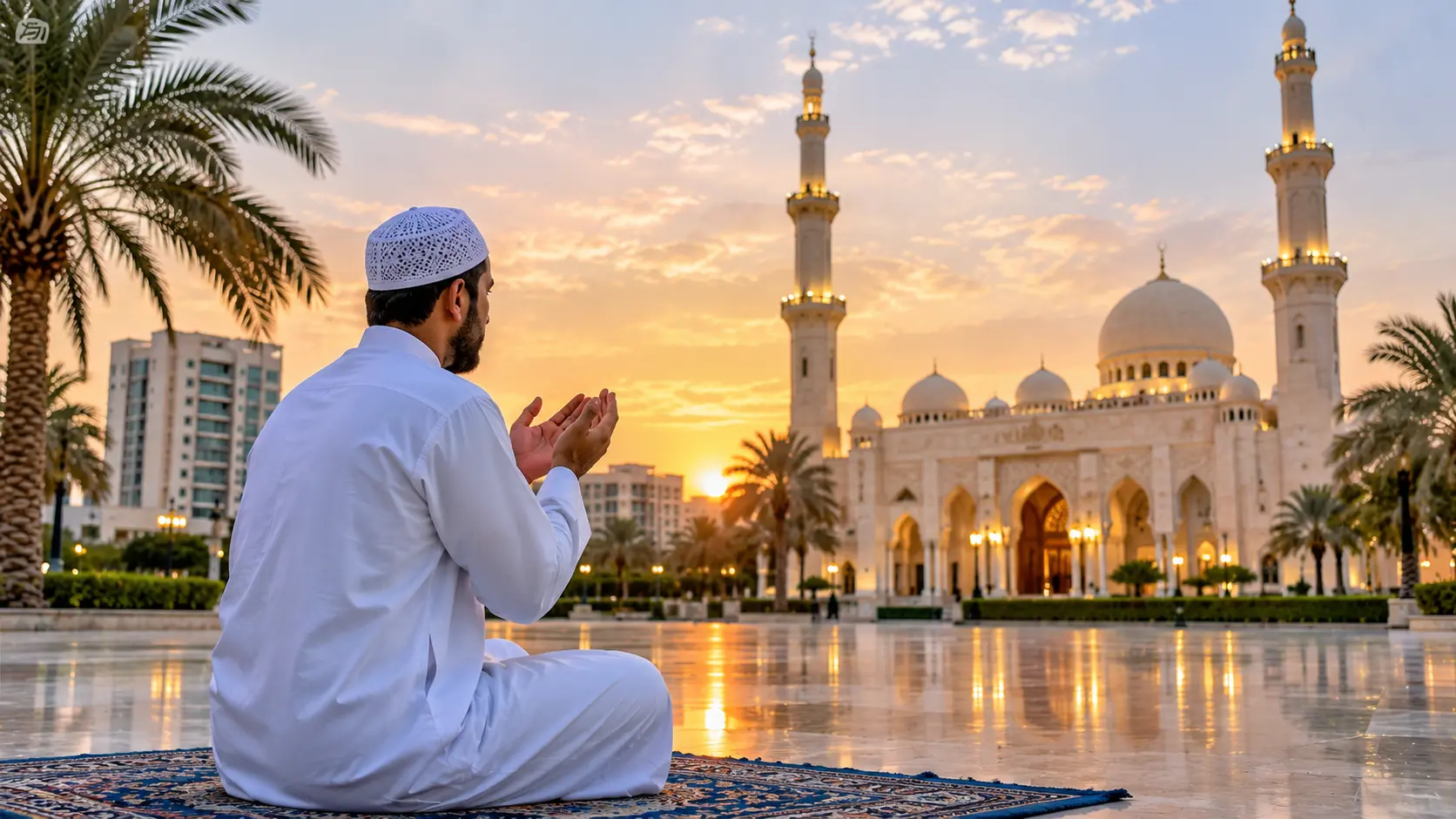
Al Ain weather follows a clear pattern. Winters from December to February are mild and sunny, the spring and autumn seasons are short and comfortable, and a long summer runs from roughly May to September, with daytime highs that regularly pass 40°C. It is a hot desert climate, and because the city sits inland, away from the Gulf coast, the heat behaves a little differently than it does in Dubai or Abu Dhabi.
This guide walks through temperatures month by month and explains what each season actually feels like. It covers rain, dust and the cooler air on Jebel Hafeet, and finishes with practical advice on when to visit and how to stay comfortable.
Al Ain Weather at a Glance
The table below shows long-term average daytime highs at Al Ain International Airport, converted from Fahrenheit and rounded to the nearest degree. They describe typical conditions, not a forecast, and individual days can run several degrees either way. July is the hottest month, with an average high around 112°F (44°C), and January is the coolest, with average lows near 55°F (13°C).
| Month | Average high (°C) | What it feels like |
| January | 24 | Mild days, cool nights |
| February | 27 | Comfortable and sunny |
| March | 31 | Warm, still outdoor-friendly |
| April | 36 | Getting hot by midday |
| May | 41 | Summer arrives |
| June | 44 | Very hot |
| July | 44 | Peak heat |
| August | 44 | Peak heat |
| September | 41 | Still very hot |
| October | 37 | Heat easing |
| November | 31 | Pleasant |
| December | 26 | Mild |
Two things stand out. The climate really has two gears: a hot half of the year (May to September) and a pleasant half (November to March), with April and October acting as the hinge. Nights also matter. Even in summer the desert releases heat slowly, so evenings stay warm, while winter nights can feel properly cool.
Why Al Ain’s Climate Feels Different from the Coast
Al Ain has a hot desert climate (Köppen BWh). That means very little rain, abundant sunshine and large swings between day and night. The city lies inland near the Omani border and the foothills of the Hajar range, so it misses the sea breeze that moderates temperatures on the coast. It also generally avoids some of the thick coastal humidity that makes summer evenings in Dubai feel heavy, although humid spells still occur.
One practical consequence is that forecasts for “the UAE” or for Abu Dhabi emirate as a whole don’t always describe Al Ain well. Look for an Al Ain-specific forecast and notice which station it uses, because the airport, the city centre and the mountain can report noticeably different numbers.
Al Ain Weather by Season
Winter (December to February)
Winter is Al Ain at its most relaxed. The cool season runs from about December 1 to the end of February, with average daily highs staying below 82°F (about 28°C). January typically sees highs around 24–25°C and overnight lows around 13°C. Skies are mostly clear and the sun is gentle rather than punishing.
The numbers can understate how cold it feels. Dry air and clear skies let the ground lose heat quickly after sunset, and valley areas near Al Ain, such as Raknah, have recorded single-digit temperatures on cold mornings in past winters. If you’re planning an early hike, camping or a sunrise at Jebel Hafeet, bring a proper jacket rather than relying on daytime averages.
Spring (March and April)
Spring is short. Average highs climb from about 31°C in March to the mid-30s in April. Mornings and evenings stay comfortable, but by midday you’ll want shade. March is also the month with the most days of rain, averaging about 1.4, so a brief shower is possible, though it’s the exception rather than the rule. It’s a good window for the Al Ain Oasis, the Hili archaeological park and other outdoor sites, as long as you start early.
Summer (May to September)
The hot season runs from about May 10 to September 24, with average daily highs above 103°F (roughly 39.5°C). In practice, June to August sit in the mid-40s°C at the airport station. Across the city, July averages a high near 110°F with lows around 86°F (30°C), so there is little relief after dark.
Skies get somewhat cloudier from mid-June to the end of August, but that doesn’t cool things down much. Even in July, overcast or mostly cloudy conditions occur only about half the time.
Summer also brings formal safety rules. The UAE’s midday break for outdoor workers runs from June 15 to September 15, covering 12:30 pm to 3:00 pm daily, and 2026 marks its 22nd consecutive year. Companies that break the rule can be fined up to Dh50,000 for multiple violations. Visitors aren’t covered by the rule, but it’s a useful signal. Those are the hours to be indoors.
Autumn (October and November)
October is the clearest month of the year, with clear, mostly clear or partly cloudy skies about 91% of the time. Highs ease from roughly 37°C in October to 31°C in November, and by the second half of the month the evenings turn properly pleasant. One climate guide rates early October to mid-November as the best stretch for hot-weather outdoor activities.
Rain, Wind and Dust in Al Ain
Rain is rare and light, and datasets disagree on the details. One climate summary names February as the wettest month, at around 0.4 inches (10 mm), while another points to March and some show almost nothing. That spread is typical of desert stations, where one storm can make up much of a year’s total. Rain seldom disrupts a trip, but storms do happen.
When they come, they tend to be short and localized, often building over the mountains. One past downpour near Jebel Hafeet dropped temperatures by about 10°C, a reminder that conditions near the mountain can change faster than on the plain. Heavy rain can also make wadis (dry riverbeds) and low-lying roads hazardous, so never drive through flowing water.
Dust and wind are the other variables. Strong winds can cut visibility, irritate eyes and airways, and make outdoor exercise unpleasant at any time of year. If you have asthma or another respiratory condition, check weather and air-quality warnings before heading out.
Jebel Hafeet: Cooler, but Not Cold
Jebel Hafeet rises about 1,249 metres above Al Ain and is the highest peak in Abu Dhabi emirate. Air cools with altitude, so the summit is noticeably more comfortable than the city, especially in the evening. One travel guide puts the high-summer difference at 8 to 12°C. An expert quoted by Khaleej Times describes typical mountain-versus-coast gaps of 5 to 10°C by day, and more at night. The two figures broadly agree, but neither is a guarantee.
Don’t confuse “cooler” with “cool.” One Khaleej Times weather roundup reported roughly 30–33°C at Jebel Hafeet on a summer night. Treat the mountain as a way to take the edge off the heat, not escape it.
A few practical tips for the summit road, which runs about 11.7 kilometres with around 60 curves:
- In summer, drive up early in the morning or around sunset.
- Fill the tank in Al Ain, because there is no petrol station on the mountain.
- Mobile coverage can be patchy on the upper sections, so download offline maps first.
- Bring a light layer, as the summit is usually breezy.
- Use a lower gear on the descent to avoid overheating your brakes.
Planning Around Al Ain’s Weather
Best time to visit Al Ain
For most visitors, late October through March is the sweet spot: sunshine, manageable highs and comfortable evenings. November, February and March are especially good for walking the oases and exploring the UNESCO-listed sites covering Al Ain’s oases, falaj irrigation systems and Bronze Age tombs.
April and October work if you stick to mornings and evenings. From May to September, plan around air conditioning. Build the day around indoor attractions, early-morning outings and a late drive up Jebel Hafeet.
Staying comfortable and safe in the heat
Heat illness is a real risk in a UAE summer, even for fit adults. A few habits help:
- Carry water and drink regularly, before you feel thirsty.
- Schedule outdoor activity before about 10 am or after sunset, and avoid 12:30–3:00 pm.
- Wear light, loose clothing, a hat and sunscreen.
- Never leave children, pets or elderly relatives in a parked car, even briefly.
- Learn the warning signs: heavy sweating, dizziness, headache, nausea and cramps. Move somewhere cool if you notice them. Confusion, fainting or a very high body temperature need urgent medical attention.
This is general information, not medical advice. For specific health concerns, follow guidance from UAE health authorities or a doctor.
What to pack
- Winter (December–February): light layers, a jacket for early mornings and evenings, and closed shoes.
- Summer (May–September): breathable cotton or linen, a hat, sunglasses, high-SPF sunscreen, a refillable water bottle and a windscreen sunshade for the car.
- All year: sturdy shoes if you plan to walk at Jebel Hafeet or the oasis.
How to Check Al Ain’s Current Weather
Averages tell you what to expect. Forecasts tell you what’s happening. For day-to-day planning, rely on the UAE’s National Center of Meteorology (NCM) for official forecasts and warnings, and cross-check with a weather app set to an Al Ain location.
Look at the temperature, the “feels like” figure, humidity, wind and any dust or fog alerts. Fog warnings matter most if you’re driving on early winter mornings.
Frequently Asked Questions About Al Ain Weather
What is the hottest month in Al Ain?
July is generally the hottest month, though June and August are almost identical. Typical July highs are around 110°F (about 43–44°C), with lows near 86°F.
Does Al Ain get cold?
Not by most standards, but winter nights can feel chilly. January highs are around 24°C with lows near 13°C. Valleys and mountain areas can be colder, so pack a jacket for early mornings.
Does it rain in Al Ain?
Rarely, and lightly. Most months see little or no rain, and sources disagree on whether February or March is wettest. Occasional storms can still cause local flooding, especially near wadis.
Is Jebel Hafeet much cooler than Al Ain city?
Yes, but by a few degrees rather than a dramatic amount. Estimates range from about 5 to 12°C cooler in summer depending on the source and time of day. Summit evenings can still be warm.
Can you visit Al Ain in summer?
Yes, with planning. Stay indoors from about midday to mid-afternoon, do outdoor sightseeing early or after sunset, drink plenty of water and use the mountain for a sunset drive.
Conclusion
Al Ain’s weather rewards timing. Come between late October and March for comfortable outdoor sightseeing, treat April and October as shoulder months, and plan around air conditioning and early starts from May to September. For Jebel Hafeet, go early or late, bring a layer and don’t expect it to be cold.
Before you travel, check the latest forecast from the NCM. Then explore more UAE travel and lifestyle guides on Khaleej Edge to build the rest of your itinerary.