A PPC card in the UAE is a Payment Prepaid Card: a reloadable card that lets you spend only what has been loaded onto it, with no credit line attached. You will meet it most often as a salary card issued through an employer, or as a corporate card for petty cash and recurring payments. Many people also search for the “PPC inquiry” portal to check a balance.
This guide covers what a PPC card is, who uses it, how a salary card like Ratibi differs from a general prepaid card, what limits and fees to expect, and how to check your balance without risking your card details.
What Is a PPC Card in the UAE?
FAB describes its Payment Prepaid Card as a prepaid card for use within the UAE, including ATM cash withdrawals and POS purchases, offered to companies that handle petty cash and recurring payments manually. In everyday use the label is broader. People apply it to most prepaid cards in the country, particularly those linked to the Magnati “PPC” balance portal.
The core idea is simple. Someone loads money onto the card, and you can spend it at ATMs, shops and online merchants up to the available balance. There is no borrowing and no monthly statement of debt, so a PPC card cannot put you into credit card debt.
How a PPC card differs from debit and credit cards
| Feature | PPC / prepaid card | Debit card | Credit card |
| Source of money | Funds loaded in advance | Your bank account | A credit limit from the bank |
| Bank account needed | Not always (varies by card) | Yes | Yes |
| Borrowing | No | No | Yes |
| Typical use | Salaries, petty cash, budgeting | Everyday spending | Spending with repayment |
The “bank account needed” row depends on the product. FAB’s corporate Payment Prepaid Card is listed as requiring no bank account for the cardholder, but some retail prepaid cards ask you to load funds from your own UAE bank account or UAE-issued card.
Who Uses PPC Cards in the UAE?
Three groups account for most use. Their cards work similarly but are set up differently, so it helps to know which one you have.
Salary cards under the Wages Protection System
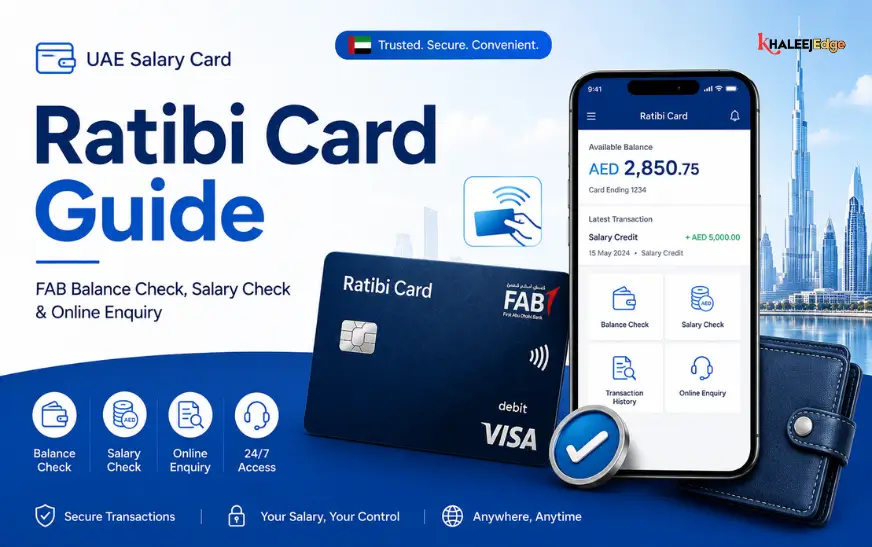
Salary cards are the most common case. FAB’s Ratibi is a payroll card built for employees earning up to AED 5,000, so they can be paid without holding a bank account. FAB says its service supports salary payments through the Wages Protection System (WPS), and it can also process non-WPS payroll.
The card is typically given to construction workers, retail and hospitality staff, security personnel and domestic workers. Your employer loads your salary onto it, and you spend or withdraw from it like any other Visa or Mastercard-network card.
Corporate cards for petty cash and recurring payments
Companies also use payment prepaid cards to avoid handling cash. A business can issue cards to staff for site expenses, fuel or small purchases, and control them through an online portal. FAB’s corporate offering includes bulk card requests, load and reload functions, PIN resets and dispute uploads through its online module.
General-purpose reloadable prepaid cards
Fintechs and licensed issuers also offer prepaid cards to residents who want a budgeting tool or a card for online shopping. One example is Nymcard’s published Key Facts Statement for a General Purpose Reloadable card. It covers UAE citizens and residents, onboarding through an app or web portal, and loading from your own UAE bank account or UAE-issued card.
Understanding the Ratibi Card in More Detail
Ratibi is the product most people mean when they talk about a PPC card, so it deserves a closer look.
Eligibility
On the employer side, the company needs a corporate account with the issuing bank, and the employee must be a UAE resident with complete, up-to-date KYC details. KYC (know your customer) is the identity verification banks must complete before issuing a card. If your card is delayed, outdated identity records are one of the first things worth checking.
What cardholders get
According to Magnati, cardholders can receive SMS alerts on every transaction, use the card at ATMs, in stores and online, and choose their own PIN at First Abu Dhabi Bank ATMs. The same page lists free personal accident insurance:
- Death or permanent total disability from an accident: 5x monthly salary or a maximum of AED 25,000
- Hospitalisation of at least 24 hours due to an accident: AED 50 per day for up to 30 days, capped at AED 1,500
- Repatriation of mortal remains: actual expenses up to AED 5,000
Coverage terms can change, so cardholders should confirm current details with the issuer or their employer.
One practical detail
Magnati’s published conditions state that an ATM that confiscates a card will destroy it, and the employer must apply for a replacement. If an ATM keeps your card, tell your employer promptly instead of trying to retrieve it.
How to Check a PPC Card Balance
FAB’s payment card page links to the Magnati balance enquiry portal at ppc.magnati.com/ppc-inquiry. Third-party guides describe the process as follows. Check the portal screens themselves, since requirements can change.
- Open the official portal address, typing it yourself or following the link from FAB’s page.
- Enter the details the form requests. Guides commonly mention the last four digits of the card number, the Card ID and a captcha.
- Submit the form and read the balance on the screen.
Other routes are often available, including the issuer’s mobile app, an ATM and customer care. For FAB’s payment card, the page lists 600 52 5500 within the UAE.
Two precautions are worth taking:
- Never enter your full card number, PIN or one-time password on a site you reached through a message or an advertisement.
- Do not share your card details with anyone claiming to “verify” your balance. Issuers do not need your PIN to show a balance.
Limits and Fees: What to Expect
Limits and fees differ by issuer and product, so no single figure applies to every PPC card. A published example shows how detailed they can be. Nymcard’s general-purpose card sets a maximum balance of AED 37,000, daily loads up to AED 10,000, and yearly loads up to AED 220,000. The same document lists:
- Transaction limits: AED 10,000 per transaction and per day, AED 50,000 per week, and AED 100,000 per month
- ATM withdrawals: AED 10,000 per day and AED 25,000 per week or month
- Fees: indicative maximums include a foreign exchange markup of 1% to 3%, an ATM fee of up to USD 10, and a card issuing fee of up to USD 30
These are one issuer’s figures, not a UAE-wide rule. Salary cards like Ratibi work under different terms. FAB’s materials say there are no monthly or minimum balance charges on its payment card.
Protections worth knowing
The Nymcard statement notes a cooling-off period of five business days after you agree to the terms, during which you can cancel unless you waive that right. It also states that cards are valid for three years, and unused balances on an expired card are returned to the cardholder. The same document says the product is licensed by the Central Bank of the UAE and that transactions are monitored under anti-money-laundering rules, so unusual activity can lead to restrictions.
How to Get a PPC Card
The route depends on the type of card.
- Salary card: Your employer arranges it. You provide your identity documents, and the company files the application with the bank. You usually cannot apply for a Ratibi card yourself.
- Corporate card: A company with a corporate account requests cards from the issuer and manages them through the online portal.
- Retail prepaid card: Choose an issuer, complete the digital or in-branch registration, verify your identity and load funds.
Before choosing a retail card, read the Key Facts Statement. It sets out limits, fees, validity and cancellation terms in one place.
Common Mistakes to Avoid
- Treating the card like a bank account: A prepaid card has a balance cap and transaction limits, and it does not earn interest.
- Ignoring FX charges: Spending in foreign currency can add a markup, which matters if you travel or shop on overseas sites.
- Forgetting SMS alerts: Free alerts on salary credits and spending are one of the easiest ways to spot unauthorized use.
- Using unofficial balance sites: Look-alike pages exist for popular portals, so type the address yourself.
- Leaving outdated records: Expired IDs or mismatched details can stop a card being issued or reloaded.
What Jaywan Means for Prepaid Cards
The UAE’s national card scheme, Jaywan, is relevant to anyone watching the prepaid market. Reports from July 2026 say Jaywan has begun nationwide issuance through banks, licensed financial institutions and exchange houses. Al Etihad Payments and Mastercard also announced in March 2025 that they would launch “Jaywan – Mastercard” debit and prepaid cards in the UAE.
If you receive a Jaywan-branded prepaid card, the same basics apply: check the limits, fees and acceptance terms with your issuer. Rollout details and which employers or issuers offer it may vary, so confirm current availability.
Frequently Asked Questions
What does PPC stand for on a UAE card?
In UAE banking, PPC generally refers to a Payment Prepaid Card. It appears on FAB’s product name and on the Magnati portal used to check balances.
Is a PPC card the same as a Ratibi card?
Not exactly. Ratibi is a payroll product built on prepaid card technology for employees earning up to AED 5,000. “PPC card” is the broader term, and it also covers corporate and general-purpose prepaid cards.
Can I use a PPC card abroad?
FAB states that Ratibi cards work on Visa and Mastercard networks worldwide. Its corporate payment card page, however, says the card gives flexibility within the UAE and lists international in-store purchases as supported. Because terms differ by product, check your card’s rules and expect possible foreign exchange charges.
Do I need a bank account to get one?
For FAB’s salary and corporate cards, the cardholder does not need a personal bank account, but the employer needs a corporate account. Retail prepaid cards may require you to load funds from your own UAE bank account or card.
What should I do if my PPC card is lost, stolen or kept by an ATM?
Contact the issuer’s customer care straight away to block the card. For a salary card, inform your employer too, because the employer is the point of contact for replacements.
Conclusion
A PPC card in the UAE is a prepaid, pay-as-you-load card. It is most visible as the salary card that lets workers be paid without a bank account, and it is also used by companies for petty cash and recurring payments. The details that matter most are who issues the card, what limits and fees apply, and how you can check the balance safely.
If you hold a PPC card, start with its terms and confirm the limits, the fees and the official balance channel. If you are an employer, ask the issuer for the latest application requirements before onboarding staff. For anything that affects your pay or legal rights, check directly with your employer, your bank or the UAE’s official labour authorities.