Most people know about heart attacks and strokes. Far fewer have heard of aortic dissection, even though it is one of the most time-critical emergencies in cardiovascular medicine. Its quieter cousin, the aortic aneurysm, often causes no symptoms at all until it is found by chance.
What is the aorta?
The aorta is the body’s largest artery. It leaves the heart, arches over the upper chest, runs down through the chest and abdomen and divides into the arteries to the legs. Every drop of blood pumped by the left side of the heart passes through it.
What is an aortic aneurysm?
An aneurysm is a bulge where the wall of the aorta has weakened and stretched. It can occur in the chest (thoracic aneurysm) or the abdomen (abdominal aneurysm). Most aneurysms grow slowly and silently. The danger is that a large aneurysm can tear or burst.
Risk factors include high blood pressure, smoking, older age, male sex and a family history of aneurysm. Some inherited conditions affecting connective tissue, such as Marfan syndrome, and a bicuspid aortic valve, a common heart valve abnormality present from birth, also increase the risk in the chest.
What is aortic dissection?
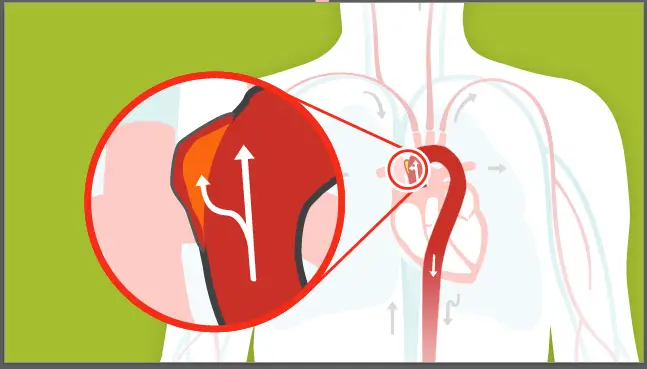
In a dissection, a tear forms in the inner layer of the aortic wall. Blood forces its way between the layers, splitting them apart. It causes sudden, severe pain in the chest or back, often described as tearing or ripping. Other signs can include fainting, weakness on one side of the body, or a difference in blood pressure between the arms.
Aortic dissection is a medical emergency. If you or someone near you has sudden severe chest or back pain, call 998 immediately.
How Are Aortic Aneurysms and Aortic Dissections Diagnosed?
Aneurysms are often discovered by chance on a scan done for another reason, such as an echocardiogram or a chest or abdominal CT. Once found, they are monitored with regular imaging to track their size and rate of growth. Aortic dissection is usually diagnosed with an urgent CT scan with contrast.
How Are Aortic Aneurysms and Dissections Treated?
For small aneurysms, the focus is on slowing growth: controlling blood pressure, stopping smoking and regular monitoring. Surgery is considered when an aneurysm reaches a certain size, grows quickly or causes symptoms.
Treatment usually involves one of two procedures. In open surgery, the damaged part of the aorta is replaced with an artificial graft. Endovascular repair uses a stent-graft inserted through a small incision in the groin and positioned with X-ray guidance. The choice depends on the aneurysm’s size, location, shape and the patient’s general health.
For dissection, the type determines the treatment. Tears involving the first part of the aorta near the heart usually need emergency surgery. Tears further down are often managed with strict blood pressure control, with endovascular repair if complications develop.
Who should be checked?
Screening programmes in several countries offer a one-off ultrasound to men around the age of 65, because abdominal aneurysms are most common in older men, particularly those who have smoked.
People with a close relative who had an aortic aneurysm or dissection, or who have a bicuspid aortic valve or a connective tissue disorder, should ask their doctor whether imaging of the aorta is appropriate. The scan is quick, painless and uses no radiation when ultrasound is used.
Living with an aneurysm
Most people live normally with a small aneurysm. Keep blood pressure under control, avoid heavy straining and lifting, quit smoking, and attend every scheduled scan. If any inherited condition is suspected, doctors may recommend screening for close family members.
Who treats it?
Care often involves several specialities: cardiologists, cardiothoracic surgeons for the chest, vascular and endovascular surgeons for the abdomen, radiologists and intensive care teams. When choosing a cardiology hospital in Dubai for ongoing monitoring, it helps to check that these specialists can work together if surgery becomes necessary.
Where is aortic surgery available in Dubai?
Aster Hospitals, which operates in Dubai through Aster Cedars Hospital & Clinic in Jebel Ali and hospitals in Al Qusais, Muhaisnah and Mankhool, lists aortic dissection treatment among the services of its cardiothoracic team.
That team provides Advanced Cardiac & Thoracic Surgery in Dubai, including coronary bypass, valve repair and replacement, minimally invasive heart surgery and thoracic surgery. Aster Hospital Mankhool also offers vascular and endovascular surgery.
An aortic aneurysm may remain unnoticed for years, while a dissection can become life-threatening within minutes. Regular monitoring, control of blood pressure and prompt attention to sudden chest or back pain can make a critical difference. If these symptoms appear without warning, seek emergency medical care immediately.