

In mid-20th-century Sudan, the musical landscape was undergoing an extraordinary revival. Modern big-band orchestras flourished in Omdurman, brass instruments and violins joined native rhythms, and radio broadcasted the sounds of emerging legends across the Nile basin. Yet behind the scenes, one boundary remained strictly guarded: composition was exclusively male territory.
While female vocalists occasionally took the stage, the technical and intellectual craft of composing—the arrangement of melodic structures, the harmonization of regional modes, and the direction of large ensembles—remained behind closed doors.
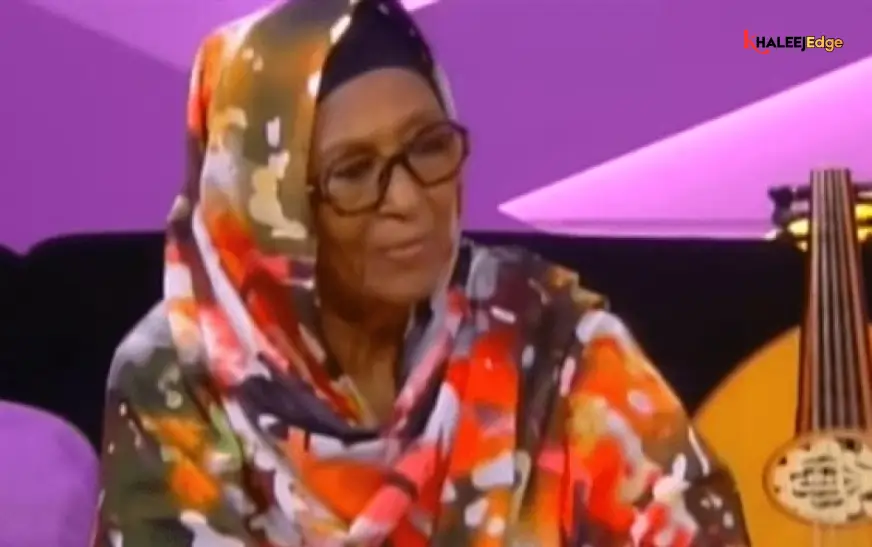
One woman dismantled that status quo with quiet, persistent determination. Her name was Asma Hamza Bashir (1932–2018). Known affectionately as the “Lady of the Oud” (Sayyidat Al-Oud), she emerged from Halfaia Al-Malaki to become Sudan’s first female composer and one of the earliest recognized female instrumental composers in the Arab and African worlds.
Her career was not marked by sudden rebellion, but by lifelong devotion to acoustic precision, regional heritage, and artistic courage. Understanding her contributions reveals not just the biography of an artist, but the rich cultural synthesis that defines modern Sudanese music.
Early Life: From Whistling to the Lute (1930s–1940s)
Every pioneering artist has a formative origin story, and Hamza’s began with a physical limitation that could have silenced a less dedicated musician. Born in 1932, young Asma grew up in an environment immersed in traditional songs and oral poetry. Like many children gifted with a musical ear, her immediate aspiration was to sing.
However, her vocal cords lacked the resonance, pitch elasticity, and stamina demanded by classical Arabic vocal styles (tarab) and traditional Sudanese vocal forms. The vocal strain caused physical discomfort, making conventional performance unsustainable. Rather than abandoning her passion, she found an alternative acoustic outlet: melodic whistling.
Hamza possessed pitch memory. As gramophone records and state radio broadcasts drifted through her neighborhood, she memorized complex, multi-layered melodic arrangements note-for-note. She reproduced intricate vocal ornamentations, vibratos, and intervals through whistling with precision.
| Development Stage | Milestone | Artistic Impact |
| Stage 1: Vocal Limitation | Childhood vocal strain | Physical limitation halted standard vocal aspirations early. |
| Stage 2: Acoustic Adaptation | Melodic whistling practice | Developed internal pitch memory and reproduction of complex arrangements. |
| Stage 3: Paternal Advocacy | Father provides a borrowed oud | Overcame cultural barriers through family support in a conservative era. |
| Stage 4: Instrument Mastery | Fretless string training | Ear-trained mastery made her one of Sudan’s first recognized female lutenists. |
Hamza’s father, an officer in the Sudanese armed forces, noticed her gift. Rather than dismissing music as an unsuitable pursuit for a young girl in the 1940s, he actively fostered her talent. Recognizing that her whistling was a manifestation of musical ability, he borrowed an oud—the fretless Arabic lute—from a fellow serviceman.
The oud is an unforgiving instrument. Without frets to dictate intervals, the player relies entirely on tactile muscle memory and acute auditory feedback. A difference of a millimeter shifts a note sharp or flat. Lacking formal sheet music or conservatory training, Hamza taught herself to play by ear. She listened intently to visiting masters of Sudanese music who gathered in cultural circles—artists such as Ahmed Mustafa, Hassan Attia, and Abdel Aziz Mohamed Daoud—translating their phrasing onto the strings. By 1946, she had mastered the fretboard, establishing herself as one of the first Sudanese women to command the instrument.
Breaking Societal Taboos: Composing in Secret
In the 1940s and 1950s, Sudanese urban culture held strict expectations regarding women in the public sphere. While female oral poets (Hakamat) and traditional singers historically occupied respected spaces in rural communities, the urban recording industry and state broadcasting system remained dominated by men. For a woman to pick up the lute was seen as unconventional; for a woman to orchestrate melodies for other musicians to perform was considered taboo.
Rather than provoking direct confrontation with traditional structures, Hamza adopted a strategy of creative patience:
- Anonymous Distribution: She began composing original melodies for family celebrations, neighborhood gatherings, and weddings, deliberately attributing the pieces to anonymity or gifting them to friends with the strict condition that her name never be credited.
- Mastery Before Visibility: Keeping her authorship private protected her work from dismissive prejudice. It allowed her melodies to circulate on pure aesthetic merit before critics could judge them based on her gender.
- “Ya Ouyouni” (1956): Her breakthrough into formal authorship occurred in 1956 with the composition “Ya Ouyouni” (“Oh My Eyes”), set to lyrics by the celebrated Egyptian poet Ali Mahmoud Taha.
“Ya Ouyouni” proved that an autodidact female composer from Sudan could create complex, emotionally resonant arrangements that rivaled established regional composers. When the Sudanese artistic community finally connected the music to its composer, her command of the craft was already undeniable.
Musical Architecture: Melding Maqamat with Sudanese Rhythms
Sudan’s unique geographical and historical position—situated at the bridge between Sub-Saharan Africa and the Arab world—gives its musical heritage a distinct character. Asma Hamza understood how to bridge these acoustic worlds, pioneering a compositional signature that blended two distinct musical languages.
The Synthesis of Pentatonic and Modal Systems
Sudanese folk music is anchored in the pentatonic scale (five pitches per octave), which provides the hypnotic, driving cadences native to traditional riverine and desert communities. Classical Arabic music, in contrast, is rooted in the heptatonic maqam system (seven notes per octave), characterized by subtle microtonal quarter-tones and intricate emotional modulations.
Hamza did not abandon Sudan’s pentatonic roots to accommodate regional Arabic trends. Instead, she treated both traditions as complementary:
| Musical Element | Traditional Sudanese Scale | Classical Arabic System | Asma Hamza’s Structural Fusion |
| Pitch Structure | Pentatonic (5-note system) | Heptatonic (7-note modal scales) | Pentatonic foundations elevated with modal Arabic phrasing |
| Intervals | Broad, whole intervals | Microtonal quarter-tones (Sikah, Rast) | Pentatonic root adorned with microtonal colorations |
| Rhythmic Base | Poly-rhythmic, African drum meters | Measured poetic cycles (Iqa’at) | Complex regional Nile rhythms beneath melodic structures |
| Lyrical Role | Responsive chanting, oral verse | Classical structured poetry | Poetic cadences determining tempo and chord progression |
Her Compositional Philosophy: Poetry as Foundation
Unlike modern commercial songwriting, where lyrics are frequently retrofitted into pre-existing hooks, Hamza treated the written word as the foundational architecture of the song:
- Immersion: She read classical and vernacular Arabic poems dozens of times until she internalized their meter (wazn), emotional turns, and verbal rhymes.
- Internal Vocalization: She allowed the natural cadences, pauses, and stresses of the spoken dialect to suggest the baseline tempo.
- Fretboard Discovery: Only after the poem had taken melodic shape within her mind did she pick up the oud to find the corresponding fingering and pitch variations.
- Ensemble Independence: She composed pure melodies without tailoring them to any specific vocalist’s vocal limitations, ensuring the song held artistic integrity regardless of who sang it.
This disciplined approach produced celebrated works, including the operetta “Azza and Azza”, as well as her legendary 1983 composition “Al Zaman Al-Tayb” (“The Good Times”), written for the vocalist Sumaya Hassan.
Professional Rise, Collaborations, and the Cultural Salon
By the late 1960s and 1970s, Hamza was no longer operating in the background. Her presence in national music circles grew, leading to an official appointment in 1982 with the Sudanese Music Corps. As part of this institution, she contributed directly to state-sponsored orchestral works, modernizing brass and string sections while protecting traditional rhythmic patterns.
The Historic Creative Dialogue with Mohammed Bashir Ateeq
One of the defining creative partnerships in Sudanese musical history was forged between Hamza and the renowned lyric poet Mohammed Bashir Ateeq. Ateeq was a master of the Haqiba lyrical movement—a poetic tradition known for elegance, evocative imagery, and emotional depth.
Their working relationship was rooted in deep mutual respect. Recognizing Hamza’s exceptional musicianship, Ateeq wrote the classic poem “Gamal Maadi” (“Transcendent Beauty”), widely regarded by cultural historians as a tribute to her artistic presence and contributions.
She also collaborated with cultural figures like vocalist and composer Abdul Karim al-Kabli, composing the melody for the celebrated work “Aghla min nafsi” (“Dearer Than Myself”).
The Halfaia Cultural Salon
Beyond concert halls, Hamza transformed her home in Halfaia into an influential artistic salon. In an era before formal conservatories were accessible to many, these domestic cultural gatherings functioned as incubators for modern Sudanese art.
| Salon Role | Functional Dynamic | Key Artistic Outcomes |
| Collaborative Workshop | Lyricists, lutenists, and singers evaluated drafts in an informal, focused setting. | Facilitated creative debate that refined lyrical and musical works. |
| Melodic Proving Ground | Tested and arranged new orchestral works before public release. | • “Azza and Azza” Operetta • “Al Zaman Al-Tayb” (performed by Sumaya Hassan) |
| Talent Incubator | Discovered, trained, and championed next-generation musicians. | • Mentored and launched vocalist Abida Sheikh • Direct oud instruction for aspiring female instrumentalists |
In this supportive environment, Hamza discovered and mentored fresh talent. Most notably, she championed the singer Abida Sheikh, providing her with the training and stage-tested melodies necessary to build a national career.
The 1997 Breakthrough: National Validation
Despite half a century of active contributions to Sudan’s artistic landscape, institutional honors remained slow to catch up to female creators. That dynamic shifted permanently on July 17, 1997.
Hamza entered the prestigious Laylat al-Qadr Al-Kubra national music competition, an annual event featuring the country’s most celebrated composers and arrangers. In this high-stakes contest, submissions were judged purely on technical execution, melodic sophistication, and structural composition.
Hamza emerged as the winner, outperforming the country’s most established male arrangers.
The victory was a watershed moment. It formally dismantled the archaic belief that women could not match men in technical orchestration. Following this triumph, regional media took note: networks across the Arab world, including Beirut-based broadcasters, invited her for retrospective interviews celebrating her status as a foundational pillar of modern Arab-African composition.
Legacy, Mentorship, and Enduring Cultural Impact
Asma Hamza passed away on May 21, 2018, in her hometown of Halfaia, leaving behind a repertoire of more than 90 recorded compositions.
Her enduring significance is defined by three major contributions:
- Pioneering Gender Representation: She proved that women in conservative societies can author cultural movements, establishing a precedent that paved the way for generations of female instrumentalists and producers across Africa and the Middle East.
- Musicological Preservation: Her discography serves as a masterclass in how to combine the African pentatonic tradition with Arabic maqam systems without sacrificing the integrity of either form.
- Community-Centered Art: Hamza remained a grounded educator. Rather than chasing commercial exclusivity, she used her platform to mentor young instrumentalists, freely sharing her techniques with anyone willing to put in the hours on the fretboard.
On July 17, 2023, Google commemorated Asma Hamza with a regional Google Doodle across the Middle East and North Africa. The doodle served as a global reminder of a woman who picked up a borrowed lute, trusted her ear, and reshaped the soundtrack of a nation.
Frequently Asked Questions (FAQs)
1. Who was Asma Hamza?
Asma Hamza Bashir (1932–2018) was a legendary Sudanese oud player and composer, widely celebrated as Sudan’s first female composer and one of the first in the broader Arab and African worlds.
2. What instrument did Asma Hamza master?
She was a master of the oud, a traditional fretless, pear-shaped stringed lute central to classical Arabic and East African music.
3. Why is Asma Hamza’s 1997 victory important?
On July 17, 1997, Hamza won the prestigious national Laylat al-Qadr Al-Kubra music competition, outperforming the country’s top male composers and ending institutional doubts about women’s capabilities in musical arrangement.
4. How did Asma Hamza start composing if she couldn’t sing?
Due to vocal strain that prevented her from singing, she channeled her musical ear into whistling intricate melodies. Her father recognized her talent and secured a borrowed oud so she could study string intervals.
5. What was Asma Hamza’s first official composition?
Her first documented composition was “Ya Ouyouni” (1956), composed to the lyrics of Egyptian poet Ali Mahmoud Taha.
6. What defined Asma Hamza’s unique musical style?
She merged the East African pentatonic scale (the tonal basis of Sudanese folk music) with the classical Arabic heptatonic maqam system, creating a sophisticated modern Sudanese sound.
7. Which famous vocalists performed her compositions?
Her arrangements were performed by prominent singers, including Sumaya Hassan (who sang “Al Zaman Al-Tayb”), Abdul Karim al-Kabli, and Abida Sheikh.
8. What was the significance of the cultural salon at her home?
Her home in Halfaia served as an artistic workshop where poets, lutenists, and vocalists gathered to test new arrangements, collaborate on lyrics, and mentor younger generations.
9. Did Asma Hamza attend a formal music conservatory?
No, she was largely self-taught. She trained her ear by listening to live performances and radio broadcasts, eventually becoming one of the first Sudanese women to complete formal oud studies in 1946.
10. Why did Google honor Asma Hamza with a Doodle?
On July 17, 2023, Google released a regional Doodle honoring the anniversary of her historic 1997 Laylat al-Qadr Al-Kubra victory and celebrating her pioneering legacy in African and Arab music.