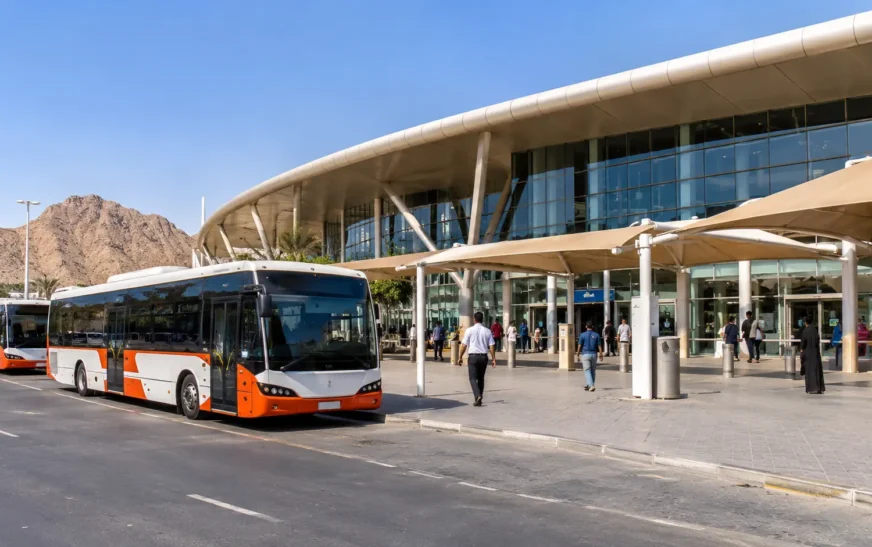
Al Ain bus station, officially Al Ain Central Bus Station, is the city’s main hub for public buses and the departure point for intercity services to Abu Dhabi and Dubai. The short version: buses to Abu Dhabi on the X90 route run roughly every hour, Dubai-bound passengers take Dubai RTA’s E201 to Al Ghubaiba Bus Station, and Abu Dhabi Mobility’s support line, 800850, is there if plans change.
Fares, timetables and payment rules shift over time, and published guides don’t always agree with each other. This article explains what the station does, which routes leave from it, how to pay, and how to avoid the mistakes first-time passengers tend to make. Where sources differ, I say so, so you know what to double-check before you travel.
What Is Al Ain Central Bus Station?
The station is the central transport interchange for Al Ain, the large inland city in the Emirate of Abu Dhabi, roughly 150 kilometres east of the capital. Local buses and intercity services both use it, and taxis are available nearby, which makes it the natural starting point if you arrive without a car.
Where it is
Listings place the station in the Hai Al Souq area of central Al Ain, close to the Al Ain National Museum. Written addresses vary between guides: both Othman Bin Affan Street and Zayed Bin Sultan Street appear in different places. Rather than trusting a printed address, search “Al Ain Central Bus Station” in Google Maps or the Darbi app and follow the live pin. The same name works well with taxi drivers.
Who runs which services
Operators differ by route, and that affects which card you need and where you get help.
- Abu Dhabi Mobility (formerly the Integrated Transport Centre, part of the Department of Municipalities and Transport) runs Al Ain’s local and regional buses and the Al Ain–Abu Dhabi intercity service.
- Dubai’s Roads and Transport Authority (RTA) operates the E201 to Dubai.
- Other emirates’ transport authorities, such as those in Sharjah and Ras Al Khaimah, run their own links to Al Ain.
Intercity Routes From Al Ain Bus Station
The table summarises the main services. Fares and journey times are indicative. The Abu Dhabi figures follow Abu Dhabi Mobility’s own listing, while the others come from news coverage and travel guides that were not all current, so confirm before travelling.
| Destination | Route | Operator | Reported fare | Typical journey | Notes |
| Abu Dhabi Central Bus Station | X90 | Abu Dhabi Mobility | AED 30 regular, AED 40 premium (official listing); some guides show AED 25–30 | About 2 to 2.5 hours | Official listing says trips run every hour |
| Dubai Al Ghubaiba Bus Station | E201 | Dubai RTA | About AED 25; a few guides say up to AED 30 | About 2 to 2.5 hours | Roughly hourly; Nol card |
| Sharjah (Al Jubail) | Sharjah authority service; route number differs by source | Sharjah transport authority | Check before travel | Check before travel | Limited frequency |
| Ajman (Musalla) | Ras Al Khaimah authority service reported by Gulf News in 2024 | Regional operator | About AED 35 (2024 report) | Check before travel | Limited frequency |
Al Ain to Abu Dhabi
This is the busiest corridor. Abu Dhabi Mobility lists an hourly daily service from Al Ain, with a regular ticket at AED 30 and a premium ticket at AED 40, sold at the Customer Happiness Offices at the station. The official page doesn’t explain what the premium option includes, so ask at the counter what you get on your particular departure.
The X90 is the route name most guides use for this journey, and it ends at Abu Dhabi Central Bus Station, next to Al Wahda Mall. Several third-party guides give a first departure around 6:45 am and a last around 11:45 pm. Treat that as a guide only, since I could not confirm it on the official page.
Allow roughly two to two and a half hours, longer if traffic builds on the highway. Some older articles quote shorter times from when the service was new.
Al Ain to Dubai
The E201 connects Al Ain Central Bus Station with Al Ghubaiba Bus Station in Bur Dubai. On weekdays, guides commonly report a first departure from Al Ain around 6:00 am and a last one around 9:00 pm, roughly hourly, with weekend times starting slightly later. Because the sources vary, check the RTA’s S’hail app or website on the day.
The one-way fare is most often reported as AED 25, paid with a Nol card. Don’t assume the bus drops you near your destination: Al Ghubaiba is in Bur Dubai, so budget time and money for a metro or taxi leg if you’re heading to Marina, Downtown or the airport. Also note that Dubai’s E101 runs to Abu Dhabi from Ibn Battuta, not to Al Ain, so it’s easy to confuse the two.
Sharjah, Ajman and beyond
Sharjah and Ajman links have been reported from Al Ain, but route numbers differ between sources and frequency is limited. If you need one, confirm the departure time with the relevant emirate’s transport authority or at the station information desk. When several buses a day aren’t guaranteed, a missed departure can cost you hours.
How to Pay for Your Trip
Hafilat card
Hafilat is Abu Dhabi’s smart card for public buses. You tap it on the validator when boarding and again when leaving, and the system works out the fare and deducts it from your balance. Abu Dhabi Mobility lists its official card information at admobility.gov.ae, including where cards are sold.
Nol card
Dubai’s RTA services, including the E201, use the Nol card. Most guides agree that cash isn’t accepted on this route, and that a Hafilat card won’t work on it. Buy and top up a Nol card before you reach Al Ain, since I couldn’t confirm that you can buy one at the Al Ain station.
Counter tickets
Abu Dhabi Mobility lists the Customer Happiness Offices at the station as the place to buy intercity tickets. Third-party guides disagree on whether cash is accepted on board the X90. Don’t rely on it. Ask at the counter before you queue, and carry a loaded card as a backup.
Using Local Buses in Al Ain
Beyond intercity trips, the station is the main interchange for the city’s local network, and Hafilat cards work on Abu Dhabi emirate’s local buses, including in Al Ain. Guides point to connections for destinations such as Al Ain Zoo, Jebel Hafeet, Al Ain Mall and Al Ain Oasis. Local route numbers change, so I haven’t listed them. Use the Darbi app, Google Maps or the route list on admobility.gov.ae for live information. For some attractions you may need a taxi for the last stretch, so check before planning a day around buses.
Step-by-Step: Your First Intercity Trip
- Choose your destination and check the timetable: Use admobility.gov.ae or the Darbi app for Abu Dhabi, and the S’hail app for Dubai.
- Get the right card: Hafilat for X90 and local buses, Nol for the E201.
- Arrive 20 to 30 minutes early: This gives you time to find the right bay, buy a ticket if needed and ask staff if something looks different from what you expected.
- Confirm the route and bay: Check the destination board and the number on the bus before you board.
- Tap in, and tap out when you leave: Forgetting to tap out can leave the maximum fare deducted on some systems, so follow the validator prompts.
- Plan your onward journey: Look up the last leg, such as a metro or taxi from Al Ghubaiba or from Abu Dhabi Central Bus Station, before you leave.
Practical Tips and Common Mistakes
- Assuming one card works everywhere: Hafilat and Nol are not interchangeable on intercity routes.
- Trusting an old timetable: Holiday and weekend schedules differ. Abu Dhabi Mobility publishes operating notices before public holidays, so check the same morning if you’re travelling on one.
- Cutting it close for the last bus: Evening departures are infrequent. If your plans might overrun, have a taxi or ride-hailing fallback.
- Confusing Dubai stations: The E201 goes to Al Ghubaiba, not Ibn Battuta or Union.
- Forgetting the heat: Summer waiting times outdoors can be uncomfortable, so carry water.
- Relying on one source: Several popular guides disagree on fares and timings, so use the operator’s app or site as the final check.
Bus, Taxi or Your Own Car?
The bus is usually the cheapest and most predictable option, particularly for solo travellers or anyone avoiding highway driving. The trade-offs are a fixed timetable, a journey of two hours or more, and a last-mile connection you’ll need to organise yourself.
Taxis and ride-hailing offer door-to-door travel at a noticeably higher cost for a trip of this length, and the exact price varies, so ask for an estimate before you commit. Driving gives the most flexibility, but you’ll pay for fuel, parking and tolls where they apply. A bus works well when you’re travelling between the stations themselves, and a car makes more sense for several stops in a single day.
Frequently Asked Questions
Where is the Al Ain bus station?
It is in central Al Ain, in the Hai Al Souq area near the Al Ain National Museum. Because street names are given differently across sources, search “Al Ain Central Bus Station” in a maps app for the exact pin.
How much is the bus fare from Al Ain to Abu Dhabi?
Abu Dhabi Mobility’s listing shows AED 30 for a regular ticket and AED 40 for a premium one. Some third-party guides quote lower figures, so treat the official page as the reference and confirm at the counter.
Is there a direct bus from Al Ain to Dubai?
Yes. The E201, run by Dubai RTA, connects Al Ain Central Bus Station directly with Al Ghubaiba Bus Station. It is most often reported at AED 25 one way and paid with a Nol card.
Can I pay cash on intercity buses?
Don’t count on it. Abu Dhabi Mobility lists counter ticket sales at the station, and guides say the E201 needs a Nol card. Carry a loaded Hafilat or Nol card for the route you’re taking.
Do the buses run on public holidays?
Public bus services in Abu Dhabi emirate, including Al Ain, run to weekend and holiday schedules on official holidays. Check admobility.gov.ae or call 800850 before you travel.
Conclusion
Al Ain Central Bus Station is the simplest low-cost way into and out of the city if you can work around a fixed timetable. Abu Dhabi-bound travellers use the X90 service, Dubai-bound travellers use the E201, and the right card matters as much as the right departure time.
Before your trip, check the live timetable on the operator’s own app, load the correct card, and give yourself a buffer for the final leg. If you’ve used the station recently and noticed a change in fares or timings, share it with us so this guide stays accurate.