
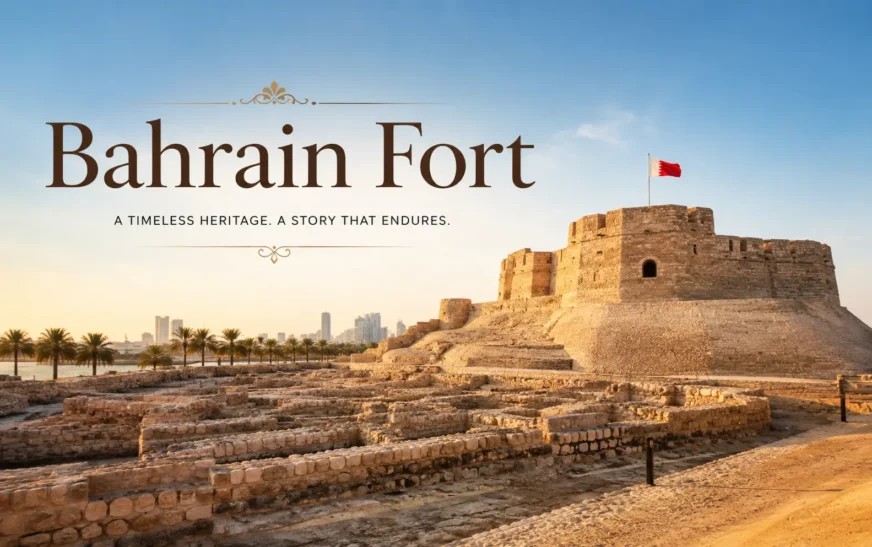
Bahrain Fort is a significant historical site in Bahrain and a must-see destination for culture enthusiasts, archaeologists, and those interested in the history of the Gulf region. Also known as Qal’at al-Bahrain, the site is more than a stone fortress. It is an ancient settlement, a former trading hub, and one of the clearest reminders of Bahrain’s deep connection with the Dilmun civilization.
Bahrain Fort is close to Karbabad and is near the Seef District, making it easy to add to a Manama itinerary. It is ideal for first-time visitors, families, expats, students, photographers, and those who wish to learn more about Bahrain than just malls and modern cityscapes.
What is Bahrain Fort?
The archaeological site and historic fort of Bahrain Fort (Qal’at al-Bahrain) is located on a man-made mound formed by numerous layers of human habitation. The site is a tell, and layers indicate a continuous human occupation from approximately 2300 BC to the 16th century AD, according to UNESCO.
The fort seen today is built on top of the mound. UNESCO notes that the impressive Portuguese fort on the 12-metre mound gave the whole site its name, as “qal’a” means fort.
Bahrain Fort is not just a military building. It is part of a much larger historical context that encompasses ancient houses, public structures, commercial districts, defensive fortifications, and connections to Bahrain’s maritime trade history.
Where Is Bahrain Fort Located?
Bahrain Fort is situated in the Karbabad area, close to Seef and not far from central Manama. The official cultural tourism page of Bahrain refers to the area as Karbabad, and Bahrain’s tourism website refers to Bahrain Fort Site Museum as being in the Seef District.
The area is also convenient for visitors, as it is close to hotels, shopping areas, cafés, and other attractions in Manama. The fort is typically included as a half-day cultural excursion from Seef, Bahrain Bay, Juffair or central Manama.
The Importance of Bahrain Fort
Bahrain Fort is important because it is a reminder of Bahrain’s history as a trading, cultural and political hub. It is not just a landmark of the local community, it is a place of regional and international significance.
UNESCO states that Qal’at al-Bahrain was the capital of Dilmun, one of the most important ancient civilizations in the region. It is also home to some of the most abundant relics of that civilization.
This is important because Dilmun was closely linked to trade routes between Mesopotamia, the Indus Valley and other areas. The Arabian Gulf’s location made Bahrain a natural hub for merchants, sailors, and various cultures.
It was added to the UNESCO World Heritage List in 2005, and its boundaries were expanded in 2008 and 2014. This recognition will help to preserve the site and to ensure its value for future generations.
A Short History of Bahrain Fort
The history of Bahrain Fort goes back thousands of years. The archaeological mound is estimated to be 300 x 600 metres and dates from approximately 2300 BC to the 16th century AD, according to UNESCO.
The site was developed due to its strategic location close to the sea. It served as a trading port and political hub at various times. Archaeological finds include residential, public, commercial, religious and military buildings. The remains demonstrate that the site was used in a variety of aspects of everyday life, not only defence.
It was the site of the imprint of various cultures and powers over time. According to UNESCO, the site is a reflection of Dilmun, Tylos, Islamic and later periods, and its importance is demonstrated through many centuries of defensive and monumental architecture.
The Portuguese fort is the most visible remnant of the site today. It is a prominent landmark with its high walls, towers and elevation, particularly at sunset.
What to See at Bahrain Fort
The Fort Walls and Towers
Most visitors are struck by the size and texture of the fort itself. The walls, towers and open courtyards make a strong visual impression. A walk around the structure will help you appreciate why this location was important for defence and sea access.
The fort is particularly beautiful for photography. The beige stone, open sky, sea views and modern skyline in the distance provide a contrast between ancient Bahrain and modern Bahrain.
The Archaeological Mound
Bahrain Fort is constructed on a hill that has been created over the centuries by settlement. This is one of the most significant features of the site as it demonstrates that many generations lived, worked, traded and built in the same location.
Only part of the site has been excavated. According to UNESCO, approximately 25% of the site has been excavated, and the remaining layers still hold significant archaeological value.
This is not only a place for visitors to walk through the ruins, but also a place to experience the ruins. It is a living document of human history, and layers that link Bahrain to the broader Gulf and ancient world.
Bahrain Fort Site Museum
The Bahrain Fort Site Museum is a must-visit when you visit the fort. The museum is opposite the fort and provides an explanation of what you can see on the site.
According to the Bahrain Authority for Culture and Antiquities, the museum collection reflects five historical periods in chronological order, each of which is exhibited in a separate gallery.
The official destination page also mentions that the museum has five exhibition halls and over 500 artefacts in the display area.
This makes the museum a valuable resource for families, students, and tourists who seek more context. Visitors are not just looking at walls and stones, but can relate the site to objects, trade, culture and daily life.
Seaside Café and Views
The setting is another reason why people enjoy Bahrain Fort. The museum features a courtyard, café, gift shop and a view of the coastline and fort area.
This makes the site appropriate for a leisurely cultural tour. The fort can be walked around, the museum visited, photos taken and then the trip can be ended at the café.
Best Time to Visit Bahrain Fort
The ideal time to visit Bahrain Fort is in the late afternoon, particularly during the cooler months. The light is more subdued, the weather is more pleasant and the location is gorgeous at dusk.
If you prefer less crowd and better visibility, you can also go in the morning. Much of the fort area is open air, and midday can be hot, particularly in summer.
When visiting with children or older family members, make an outdoor walk a safe experience. The visit will be easier if you wear comfortable shoes, bring water, sun glasses and light sun protection.
Opening Hours and Visitor Notes
| Place | Timings |
|---|---|
| Bahrain Fort | Daily: 8:00 AM – 8:00 PM |
| Bahrain Fort Site Museum | Tuesday to Sunday: 8:00 AM – 8:00 PM. Closed on Monday |
Please check the latest schedule before visiting as opening information may change from official listings, particularly during public holidays, Ramadan and special events.
How long will you stay at Bahrain Fort?
The Bahrain Fort and the museum can be visited in about 1.5 to 2.5 hours by most visitors. One hour may be sufficient if you are only interested in photos and a short walk. Take more time if you like history, museum displays and slow sightseeing.
The key to a good visit plan is simplicity:
- Begin at the museum to learn the history.
- Go to the fort and visit the main building.
- Take photographs from various perspectives.
- End at the café or nearby Seef area.
This order is effective because the museum provides context for what you will see outside.
Why Bahrain Fort is good for different visitors?
Bahrain Fort serves a variety of travelers.
It provides direct access to one of Bahrain’s most important archaeological sites for history lovers. It is an outdoor learning experience for families that is more engaging than a visit to a museum. The fort offers good shapes, warm stone colours, sea views and skyline contrasts for photographers.
It is one of the best places for first time visitors to learn about Bahrain’s identity. The site brings together ancient trade, local heritage, maritime life and contemporary cultural preservation in one location.
Nearby Attractions to Add to Your Trip
Bahrain Fort is located near Manama and Seef, so it can be combined with other locations.
If you’re interested in learning more about Bahrain’s history, the Bahrain National Museum is a great match. If you need food or shopping after the visit, you can use Seef Mall and the nearby cafés. Bahrain Bay and Manama’s waterfront areas can also be added for modern city views.
For a full cultural day, visit Bahrain National Museum in the morning, Bahrain Fort in the late afternoon and then dinner in Seef or Manama.
Common mistakes to Avoid
A frequent error is to only visit the fort and not the museum. The fort is impressive in itself, but the museum helps to explain the deeper meaning of the site.
Another error is running during the hottest time of day. Since much of the site is outdoors, late afternoon is usually more comfortable.
Visitors should also not only use the site as a photo opportunity. Bahrain Fort is a protected heritage site and should be visited with respect. Do not climb on restricted areas, do not disturb stones, walls or archaeological remains, stay on visitor paths.
The last error is not checking timings before arrival. Official listings are subject to change and museum access may vary from the outdoor fort area.
Final Takeaway
Bahrain Fort is one of the most significant places to visit in Bahrain. It brings together archaeology, the history of the Gulf trade, Dilmun heritage, coastal views and a well-designed museum experience in one convenient place.
If you are looking for more than a quick sightseeing stop, Qal’at al-Bahrain provides a more in-depth look at the history of Bahrain’s development as an important cultural and commercial hub in the region. Bahrain Fort is a must-visit destination for anyone visiting Bahrain for history, photography, education, or simply a leisurely cultural trip.
FAQ’s
What is Bahrain Fort?
Qal’at al-Bahrain, also known as Bahrain Fort, is an ancient fort and archaeological site located near Manama, Bahrain. It was once connected with the ancient Dilmun civilization.
What is the location of Bahrain Fort?
Bahrain Fort is located in the Karbabad area, close to Seef and central Manama. Easy access from many major hotels and city attractions.
What is the name of the king of Bahrain?
Yes, Qal’at al-Bahrain was added to the UNESCO World Heritage List in 2005. It is officially recognized for its cultural and archaeological importance.
Why is Bahrain Fort famous?
Bahrain Fort is known for its association with the Dilmun civilization, ancient trade routes and the Portuguese fort on top of the archaeological mound.
Does Bahrain Fort have a museum?
Yes, Bahrain Fort Site Museum is close to the fort. It presents artefacts and tells the story of the site in five chronological galleries.
How long does it take to visit Bahrain Fort?
The average visitor will spend 1.5 to 2.5 hours at the museum, fort and views. A brief visit can last approximately one hour.
What is the best time to visit Bahrain Fort?
The best time is late afternoon when the weather is cooler and the sunset is gorgeous. The morning is also a good time to visit, as it is quieter.
Is Bahrain Fort a good place for families?
Yes, Bahrain Fort is family friendly, particularly with the museum. Children can learn Bahrain’s history in a visual and open air environment.
Does Bahrain Fort offer guided tours?
The Bahrain Authority for Culture and Antiquities states that there are free guided tours, but booking is recommended.
What is the best attire for Bahrain Fort?
Wear comfortable shoes and light, modest clothing appropriate for walking outside. Sunglasses, water and sun protection are useful in warmer months.