
Buying a used car can save money, but hidden mechanical problems, accident damage, or electrical faults can turn a good deal into an expensive mistake.
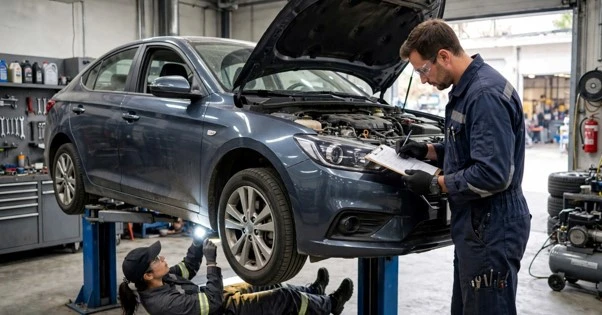
Before making a decision, buyers should arrange a professional inspection to understand the car’s condition. If you are comparing options for car repair in Abu Dhabi, look for a workshop with suitable diagnostic equipment, experienced technicians, and a clear inspection report.
The right place for a pre-purchase car inspection depends on the vehicle’s make, age, condition, and history. A reliable workshop should examine more than the car’s exterior and explain any issues that could affect safety, performance, or future repair costs.
Why Is a Pre-Purchase Car Inspection Important?
A used car may look clean and run smoothly during a short test drive while still having underlying problems. Engine leaks, worn suspension parts, cooling system faults, transmission issues, and electrical problems may not be immediately obvious to a buyer.
A professional inspection helps identify these concerns before money changes hands. It can reveal repairs that may be needed soon and help buyers estimate the likely cost of ownership. Although an inspection cannot guarantee that a car will never develop a problem, it provides a clearer picture of its current condition.
It is especially useful when buying a luxury car, a high-mileage vehicle, or a car with incomplete service records. These vehicles may have expensive components that require specialist attention.
Where To Get Pre-Purchase Inspection in Abu Dhabi?
1. Choose an Independent Automotive Workshop
An independent workshop with pre-purchase inspection experience can be a practical choice for buyers who want an assessment before committing to a sale. Look for a provider that inspects mechanical, electrical, and safety-related systems rather than focusing only on visible damage.
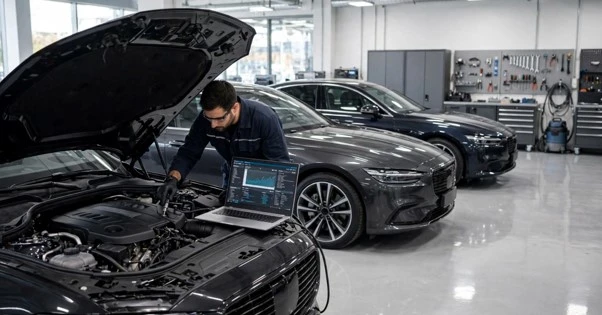
Ask what the inspection includes before booking. A thorough assessment may cover the engine, transmission, brakes, suspension, steering, cooling system, air conditioning, battery, tyres, and electrical systems. The technician should use suitable diagnostic tools where required and explain any warning lights or stored fault codes.
It is also worth checking whether the workshop can inspect the specific make and model you intend to buy. Some vehicles need brand-specific diagnostic equipment or technicians familiar with their common faults.
2. Consider a Specialist for Luxury or Complex Cars
Luxury cars often contain advanced electronics, complex transmissions, adaptive suspension systems, and driver assistance features. Repairing these components can be costly, so a basic visual check may not be enough.
If you are considering a premium or performance car, choose an inspection provider with experience working on that brand. The technician should understand the vehicle’s systems and know which areas deserve extra attention based on its age, mileage, and service history.
For example, a used car with an automatic transmission may need closer examination for delayed gear changes, unusual noises, fluid leaks, or stored transmission faults. Hybrid and electric cars may require additional checks of the high-voltage system and battery health by appropriately qualified technicians.
Before booking, confirm that the workshop has the tools and expertise needed for the particular vehicle. Not every general repair shop can perform every specialist test.
3. Check the Engine and Transmission
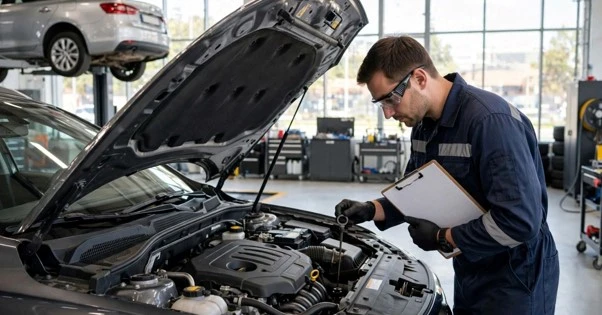
The engine and transmission are among the most important areas to assess because major repairs can be expensive. A pre-purchase inspection should look for oil leaks, coolant leaks, unusual engine noises, overheating signs, and visible damage around key components.
The technician may check fluid condition, inspect belts and hoses where accessible, and use diagnostic equipment to investigate engine warning lights or stored faults. A road test, when safe and permitted, can help identify rough idling, poor acceleration, unusual vibrations, or shifting problems.
Buyers should not rely on a dashboard without warning lights as proof that the engine is healthy. Some faults appear only under certain conditions, while others may have been cleared before the inspection. The findings should be considered alongside maintenance records and the car’s overall condition.
4. Inspect the Body for Accident Damage
A car’s exterior can reveal signs of previous accidents, poor repairs, or exposure to harsh conditions. However, fresh paint and polished panels can make damage difficult for an inexperienced buyer to recognise.
A proper inspection should look for uneven panel gaps, differences in paint finish, signs of repainting, damaged fasteners, corrosion, and repairs around structural areas. A paint thickness gauge may help identify panels that have been repainted, although readings must be interpreted correctly and cannot prove the full history of a vehicle.
The technician should pay particular attention to areas around the chassis and other structural components. Evidence of serious structural damage may affect the car’s safety and value. If the inspector finds signs of major accident repairs, ask for an explanation and consider obtaining further specialist assessment before proceeding.
5. Test the Electrical Systems and Air Conditioning
Electrical faults can be difficult to identify because they may affect several systems at once. During an inspection, the technician should check important features such as exterior lights, power windows, central locking, dashboard indicators, infotainment controls, parking sensors, and other fitted equipment.
A diagnostic scan can help identify fault codes in supported control modules. However, not every fault code indicates a current problem, and a scan alone does not replace physical testing.
Air conditioning deserves attention in Abu Dhabi’s hot climate. The inspector should check whether the system cools effectively and look for signs of leaks, abnormal compressor noise, or other faults. Buyers should test the system long enough to notice inconsistent cooling rather than assuming it works because cold air comes out briefly.
6. Examine the Suspension, Brakes, and Tyres
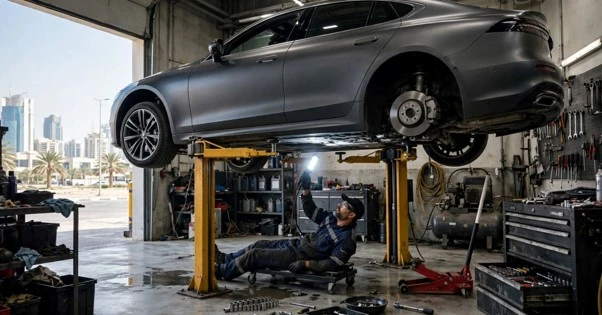
Suspension and braking problems can affect both comfort and safety. Worn shock absorbers, damaged suspension bushes, steering play, uneven tyre wear, or brake vibration may indicate that repairs are needed.
A workshop should inspect the visible condition of suspension components, brake pads and discs, tyres, and steering parts. A road test may help identify pulling to one side, unusual noises, vibrations, or poor braking response when conditions allow.
Tyres can provide useful clues about the car’s condition. Uneven wear may point to alignment issues, worn suspension components, or incorrect tyre pressure. Buyers should ask the inspector to distinguish between routine wear and signs of a larger underlying problem.
7. Review the Inspection Report Before Buying
The inspection report is one of the most useful outcomes of a pre-purchase assessment. It should explain the findings clearly instead of simply labelling the car as good or bad.
Ask the workshop to separate urgent safety concerns from repairs that may be needed soon and minor maintenance items. Where possible, the report should include photographs, diagnostic findings, and recommendations for further testing.
Use the results to make a more informed decision. You may choose to proceed with the purchase, negotiate the price to account for identified repairs, request that the seller resolves certain problems, or walk away if the risks are too high.
Remember that an inspection reflects the vehicle’s condition at the time of assessment. It should be combined with a review of service history, ownership documents, accident information where available, and any relevant vehicle records.
Why Consider Al Zaabi Autocare for a Pre-Purchase Inspection?
Al Zaabi Autocare offers a range of automotive services, including vehicle inspections, diagnostics, mechanical repairs, and electrical work. Its 360-degree vehicle inspection and written quotation process can help customers understand the findings and any recommended work.
The workshop has more than 10 years of experience and provides services for 51 car brands. Its wider capabilities include engine and transmission repairs, suspension work, air conditioning, body repairs, and other maintenance services. This range may be useful if an inspection identifies issues that need further assessment or repair.
Before booking, buyers should confirm that the workshop’s pre-purchase inspection covers their specific vehicle and the checks they require. They should also ask whether any brand-specific diagnostics or specialist tests need to be arranged separately.
Contact Information
Address: Plot no 69, Mussafah M-37, Abu Dhabi, UAE
Phone: +971 50 669 7282